FAQs on Food Drying and Food Dehydrator
Getting Started
Why should I Dehydrate?
Dehydrating is a natural, highly effective way to preserve food. With EZIDRI, the gentle process retains most of your food’s nutrients, far more than traditional preservation methods. No additives, sugars, salts, or preservatives are needed just pure, healthy food.
Dehydrated foods can last for months when stored in airtight containers in a cool, dark, dry place or even in the freezer. Because moisture is reduced to less than 2%, foods shrink by up to 90% in volume, making storage easy and efficient. And if you store them in the fridge or freezer, a power outage won’t affect their safety or quality.
- Retains nutrients naturally
- No preservatives, sugar, or salt
- Long shelf life months of storage
- Reduces volume for easy storage
- Safe even if electricity is lost
How do EZIDRI Dehydrators Work?
EZIDRI dehydrators use a unique smart airflow system to dehydrate your food evenly and safely. A fan in the base both draws in and circulates air. The air passes over a heating element, warming it to the temperature you’ve selected, then flows up the sides of the trays. With the lid on, this warm air is evenly forced across every tray and then up through the centre of the unit before exiting the top.
This design ensures each tray gets clean, fresh air, so flavours don’t mix between trays. All trays and sheets are made from ABS food safe plastic that emits no harmful fumes. Safety is also a priority. You can’t reach any moving parts, and the unit never gets too hot to touch.
- Even, consistent dehydrating on all trays
- Clean air circulation no flavour transfer
- Safe, food-grade materials
- Cool-to-touch, safe design
What Can I Dehydrate?
You can dehydrate a wide range of foods with EZIDRI:
- Fruits & Vegetables: Apples, berries, tomatoes, carrots, leafy greens, and more
- Meats & Fish: Beef, lamb, certain fish (for jerky and snacks)
- Herbs & Spices: Fresh herbs, flowers, and spices
- Meals & Soups: For convenient, long-lasting portions
⚠️ Not recommended: avocado, raw pork, chicken, raw eggs, and shellfish.
- Easy, natural preservation
- Perfect for snacks, meals, and flavourings
- Safe & efficient with EZIDRI’s gentle dehydrating process
Do I need to rotate the trays during drying?
No. This is one of the biggest practical advantages of the Ezidri airflow system. Because warm air reaches every tray individually at the same temperature, there's no hot or cool zone in the stack. You load it, set the temperature, and walk away. No checking, no shuffling, no uneven results.
What is the difference between the FD500 Snackmaker and the FD1000 Ultra?
Both models use the same horizontal airflow design and the same food-safe materials. The key differences are power, maximum tray capacity, and the size of accessories.
FD500 Snackmaker
500 watts
Expands to 15 trays
FD1000 Ultra
1000 watts
Expands to 30 trays
The FD1000 is better suited to large harvests, bulk drying, and serious home food preservers. The FD500 is a great starting point for families and everyday use. Both models start with 5 trays and you can add more as you need them.
Note that FD500 and FD1000 accessories are not interchangeable due to different tray diameters.
Can I dry different foods at the same time?
Yes, as long as the foods require the same drying temperature. Ezidri's horizontal airflow prevents flavour transfer between trays, so you can dry savoury and sweet foods at the same time without them affecting each other's taste. Many people choose not to mix very strongly flavoured foods like onions and garlic with fruit, though this is purely a personal preference rather than a technical issue.
How Much Does It Cost to Operate an EZIDRI Dehydrator?
EZIDRI dehydrators are very energy efficient. Pricing depends on current power prices, but in New Zealand approximate usage is:
- EZIDRI Ultra FD1000 — 19 cents per hour (regardless of how many trays are in use)
- EZIDRI Snackmaker FD500 — 11 cents per hour
- Low-cost, efficient operation
- Save energy without compromising drying performance
- Perfect for daily or weekly use
What Is the Wattage of the Elements?
- EZIDRI Ultra FD1000: 1000 W element, but it runs less than 50% of the time thanks to thermostatic control.
- EZIDRI Snackmaker FD500: 500 W element, also operating less than 50% of the time.
- Efficient, controlled heating
- Consistent, even drying
- Keeps energy use low without compromising performance
Trays & Accessories
How many trays can I use?
It depends on what you’re drying. Lighter foods let you run a taller stack; wetter or bulkier foods need a little more space and airflow between the trays, so the maximum comes down.
FD1000 Ultra
- Up to 30 trays — light herbs and flowers
- Up to 24 trays — fruit, vegetables and beef jerky
- Up to 15 trays — fruit roll-ups, meals or soups
FD500 Snackmaker
- Up to 15 trays — herbs and flowers
- Up to 12 trays — fruit, vegetables and beef jerky
- Up to 10 trays — fruit roll-ups, meals or soups
Both models come with 5 trays as standard. You can buy additional trays any time and simply stack them straight on top. There's no need to upgrade the base unit as your needs grow.
Tip:This is one of the things Kiwis love most about Ezidri. Start small, grow as you go. Many customers are still using the same base unit decades later, just with more trays on top.
How Much Produce Can I Fit on a Tray?
- Each tray can hold approximately 500 g (½ kg) of produce.
- Exact amount depends on the type of produce and how it’s prepared or sliced.
- Maximises drying efficiency
- Helps plan your batches
- Ideal for fruits, vegetables, herbs, and more
How Do I Use the Mesh Sheets?
- Mesh sheets are perfect for small items like peas, herbs, and flowers.
- Use them for sticky or delicate foods such as bananas, kiwi, tomatoes, and beef jerky.
- The pliable mesh prevents sticking while allowing even airflow for consistent drying.
- Ideal for tiny or sticky foods
- Ensures even drying
- Easy to use and clean
How Do I Use the Solid Sheet for Purees and Fruit Roll-Ups?
- Use the solid sheet for fruit and vegetable purees, fruit roll-ups, or drying meals and soups.
- Lightly coat with vegetable oil before use so roll-ups lift off easily.
- After use, wipe with a paper towel or wash with warm water only – do not use detergent.
- Perfect for fruit roll-ups and purees
- Easy to remove and clean
- Maintains flavour and texture
What are Spacer Rings used for?
A Spacer Ring is a tray without inside spokes. It creates extra height between trays in your stack, which is useful for bulkier produce that's taller than the standard tray gap allows. They're also commonly used when drying long-stemmed flowers like hydrangeas, where you need more vertical room without blocking airflow.
Are FD500 and FD1000 accessories interchangeable?
No. The FD500 and FD1000 trays, sheets, and spacer rings are different sizes and cannot be used on the opposite model. FD1000 accessories are 345mm in diameter; FD500 accessories are 315mm. Always check which model you own before ordering replacement parts or accessories.
If you're unsure, the model number is printed on the underside of the base unit.
I have an old Harvest Maid dehydrator. Will current Ezidri accessories fit it?
Yes. Ezidri and Harvest Maid share the same tray system, so current FD1000 trays and accessories are compatible with older Harvest Maid units. This is one of the reasons so many Kiwi families have been loyal to the brand for 30 or 40 years. If your old base packs up, your trays carry straight over to a new unit.
What does the Apple Peeler, Corer & Slicer do?
It peels, cores, and slices an apple in one smooth motion, giving you perfectly consistent rings ready for loading straight onto your trays. It makes a huge difference when you're processing a large tree harvest. It also works well on potatoes and other firm vegetables.
The suction base keeps it firmly on the bench during use. It's one of our most popular accessories alongside the dehydrators themselves, and customers consistently describe it as a must-have for anyone drying in bulk.
Drying Tips
How Thick Should I Cut Fruit or Vegetables?
- Maximum 5 mm (¼ inch) per slice.
- Thinner slices dry faster and more evenly.
- Speeds up dehydrating
- Ensures consistent results
- Perfect for fruits, vegetables, and herbs
What Is Pre-Dip Treatment?
- Pre-dip treatment improves the appearance of fruit, extends shelf life, and prevents browning.
- Common options include citrus juice, pineapple juice, or ascorbic/citric acid.
- These are a natural alternative to chemical preservatives like sodium metabisulfite and help preserve vitamins A and C.
- Keeps fruit looking fresh
- Extends storage life
- Preserves nutrients naturally
What is blanching and do I need to do it?
Blanching means briefly steaming or boiling food before drying. For most vegetables (potatoes, carrots, broccoli, beans), blanching stops the enzymes that cause colour loss and texture degradation during drying and storage. Without it, dried vegetables can turn dull or develop off-flavours over time.
It's not needed for most fruit. For berries and grapes with a waxy skin, you do need to 'check' the skin first by dipping them in boiling water for 30 to 60 seconds, which cracks the skin just enough for moisture to escape during drying.
How Long Does Dehydrating Take?
Dehydrating times vary depending on the type of food, slice thickness, moisture content, and even the humidity in the air. Most fruits and vegetables take 10–14 hours. Some items, like apricot halves, grapes, or blueberries, may take longer.
- Plan ahead for best results
- Thinner slices dry faster
- EZIDRI’s even airflow ensures consistent drying every time
How Do I Know When Food Is Dehydrated?
- Different foods have different textures and pliability when dry.
- A simple test: bend and gently squeeze the food at the fracture point. If moisture beads appear, it needs more drying.
- With experience, you’ll quickly judge dryness by feel.
- You can lift trays during the cycle to check progress, but don’t turn off the unit, partly dried food may rehydrate.
- Ensures perfectly dried food
- Easy to monitor progress
- Helps avoid over or under drying
Why is my dried fruit soft when warm but crispy once cooled?
This is completely normal. Many foods, especially apple chips, feel slightly soft while they're still warm from the dehydrator. Once they cool to room temperature over 5 to 10 minutes, the texture sets and they become properly crispy. Always let food cool before testing whether it's done, otherwise you might over-dry it chasing a crunch that was already there.
Can I use parchment paper instead of Solid Sheets?
Yes, in a pinch. If you use parchment paper, cut a hole in the centre to match the Ezidri tray design so airflow can still circulate through the stack. Without that hole, air gets blocked and drying becomes uneven. That said, the reusable Solid Sheets are far more convenient for regular use, and they're food-safe and easy to clean.
Should I oil the trays before loading food?
Generally not necessary, but a very light wipe of food-grade oil can help sticky foods like bananas or fruit leathers release more easily once dried. If you find food sticking, try a mesh sheet underneath, which also helps with removal. Avoid aerosol sprays, which can leave a residue that's difficult to clean off.
Safety & Operation
How do I clean the units?
- Trays & Lid: Wash with warm, soapy water. Use a soft brush for stubborn spots.
- Base Unit: Never immerse in water. Simply wipe with a soft, damp cloth.
- Safety First: Always unplug the unit before cleaning.
- Easy to clean
- Safe for daily use
- Maintains hygienic, long-lasting performance
Can I leave my Ezidri running overnight or when I go out?
Yes. Dehydrators are designed for extended unattended use, and most people run them overnight. The key things to ensure are that the unit is placed on a flat, heat-resistant surface in a well-ventilated room, nothing is covering or touching the unit while it's running, and there's adequate airflow around it.
For full safety guidance, see the Important Safeguards section in your instruction manual. If you've misplaced your manual, you can download a copy from this site.
What happens if the power goes out while food is drying?
If the food is still wet and the power is out for more than 2 hours, it's safer to discard any meat or fish you were drying. For fruit and vegetables, it's usually fine to resume drying once power is restored, especially if the interruption was short. Food that was already close to done is generally safe to continue.
Can I wash Ezidri trays in the dishwasher?
It's not recommended. The high heat of a dishwasher can warp the tray plastic over time. The best approach is to wash trays with warm soapy water and a soft brush or cloth. The mesh and solid sheets can be soaked briefly if needed. Never submerge the base unit in water as it contains the motor and heating element.
Can I use my Ezidri for things other than food?
The Ezidri is designed for food and organic craft materials such as drying flowers. It's not designed for drying wet clothing, shoes, or any non-food items, as this can damage the motor and may present a safety risk. It's also brilliant for a few kitchen tricks beyond standard food drying: proofing bread dough at 35°C, softening crystallised honey at 40°C, and making homemade spice powders from dried ginger or turmeric.
Troubleshooting
My food is taking much longer than the guide says. What's wrong?
Humidity is the most common reason. On a humid day, drying times can be 20 to 30% longer than the guide suggests. Other causes include slicing food thicker than recommended, loading trays too densely (which restricts airflow), or a very high moisture content in the food itself (over-ripe or waterlogged fruit, for example).
If you're consistently getting longer-than-expected times, try slicing thinner, spreading food in a single layer without overlapping pieces, and drying during cooler, less humid parts of the day.
The centre of my trays isn't drying as well as the edges. Why?
Make sure the central chimney hole in each tray is clear. Air needs that path to circulate through the stack. If food or a solid sheet is blocking the centre hole, airflow gets restricted and the centre of each tray dries more slowly. Always load food in a ring around the outer part of the tray, leaving the centre hole clear.
My fruit leather has come out brittle instead of flexible. What happened?
It's been over-dried, or dried at too high a temperature. Fruit leathers should feel tacky but peel cleanly when done, not crack. You can save over-dried leather by lightly misting both sides with water and rolling it in baking paper for a few hours, which reintroduces just enough moisture to restore flexibility.
There's moisture in my storage jar after a few days. What should I do?
This means the food wasn't fully dry before it went into storage. Put it straight back in the dehydrator for 2 to 4 hours to finish the job, then let it cool completely before resealing. Going forward, the best test before storing is the 'conditioning' method: put food in a loosely lidded jar for a day or two. If any condensation or moisture appears inside the jar, it needs more drying time.
My trays smell after drying strong foods like garlic or fish. How do I remove the odour?
Soak trays in a mixture of water and 10% white vinegar for 30 minutes, then rinse thoroughly and air dry before next use. For persistent smells, bright sunlight works well too. Place clean trays outside in direct sun for a few hours, which naturally neutralises odours.
Storing Food
What Is the Storage Life of Dehydrated Goods?
- Most dehydrated foods last around 12 months when stored in a cool, dark, dry place and in an airtight container.
- Under ideal conditions, shelf life can extend to 2–3 years.
- Storage life varies slightly depending on the type of produce.
- Long-lasting preservation
- Keeps flavours and nutrients
- Perfect for planning snacks, meals, and emergency supplies
What Do I Do When the Produce Is Dehydrated?
- Let it cool completely before storing.
- Pack in airtight, moisture proof containers old preserving jars or coffee jars work well.
- Store in a cool, dark, dry place for best results.
- Important: Improper storage can cause browning, especially with herbs.
- Keeps flavor, color, and nutrients
- Long lasting storage
- Easy to organize and access
How Do I Rehydrate or Reconstitute Dehydrated Foods?
- Typically, use 1 cup of dried food to at least 1 cup of hot water.
- Soak for 5–20 minutes depending on the type of produce.
- Once rehydrated, cook or use the food as you normally would.
- For full guidance, refer to your EZIDRI Instruction & Recipe Book.
- Simple and quick rehydration
- Perfect for cooking or snacking
- Maintains flavour and nutrients
Should I use oxygen absorbers or silica gel?
They do different jobs. Silica gel removes moisture from the air inside your container, which prevents softening. Oxygen absorbers remove oxygen, which prevents oxidation, colour loss, and spoilage. For short-term storage (under 6 months), an airtight container is usually enough. For long-term storage, using both is the most reliable approach.
A 300cc oxygen absorber per 1-litre jar is a common starting point.
How do I stop sticky dried fruits like dates from clumping in the jar?
After drying, toss the fruit in a very small amount of arrowroot powder or cornflour before storing. This coats each piece lightly and stops them sticking together in the jar. It doesn't affect the flavour at all. It works particularly well for dates, figs, and very sweet apricots.
Warranty & Support
What does the warranty cover?
Every Ezidri comes with a 2-year warranty covering manufacturing defects in the base unit. To activate your warranty, register your product using the QR code in the warranty section of your instruction manual. Registration also keeps you updated with any product news, tips, and exclusive offers.
The warranty covers the base unit. Consumable accessories such as trays, sheets, and spacer rings are not covered under warranty but can be replaced at any time through the online store.
My base unit has stopped working. What are my options?
If your unit is within the 2-year warranty period, contact us and we'll arrange a replacement base. If your unit is older and out of warranty, we can supply a replacement base unit, and your existing trays and accessories will work straight onto the new base. This is a much more cost-effective option than buying a complete new unit.
Get in touch with the team via the contact page and we'll work out the best option for your situation.
I've lost my manual. Can I get another one?
Yes. You can download the instruction manual and drying guide as PDF files from this website at no charge. If you'd prefer a printed copy, we can post one out to you for $10.00 plus shipping. Contact us to arrange a physical copy.
What is the 30-day happiness guarantee?
If for any reason you're not happy with your Ezidri within the first 30 days of purchase, contact us and we'll sort it out. We're confident you'll love it, but we want you to buy with complete peace of mind. Get in touch with the team and we'll discuss your options.
Ready to get started?
Both models come with 5 trays, free delivery on all dehydrators, and a 30-day happiness guarantee.
 BEST SELLER
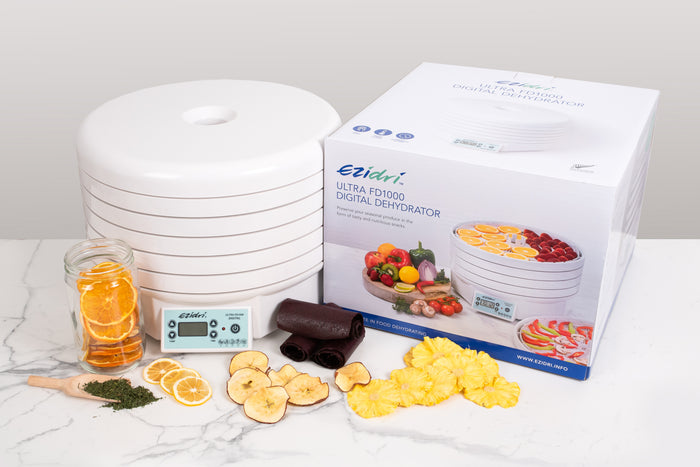
Ultra FD1000
- ✓ 1000 watts
- ✓ Expands to 30 trays
- ✓ For big harvests
- ✓ 5 trays included
 GREAT STARTING POINT
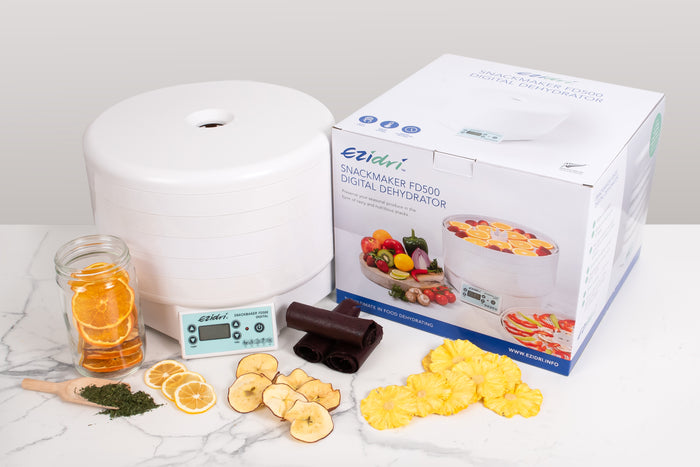
Snackmaker FD500
- ✓ 500 watts
- ✓ Expands to 15 trays
- ✓ Perfect for families
- ✓ 5 trays included
Still have a question? We're here.
Our team in Tauranga are happy to answer anything not covered above. Most questions get a reply the same day.